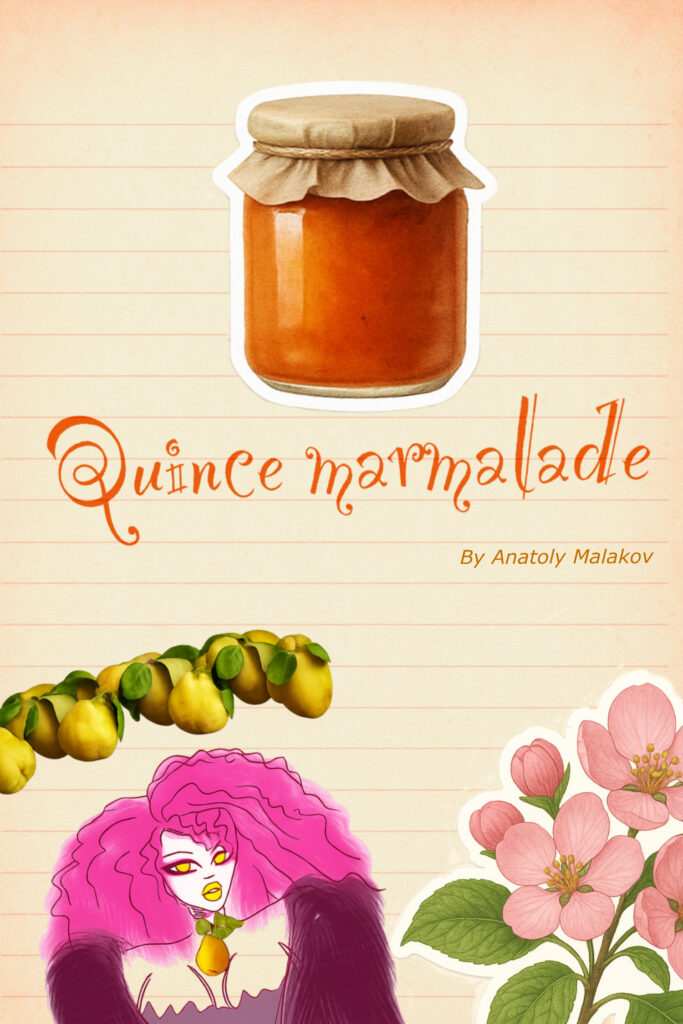

“Last night, I made quince marmalade.
I stirred in my tears, I stirred in my pain
How could I go without them?
And I added my failures too…
It was supposed to be marmalade,
but it seems it turned into poison!
Ah, how I wanted it to be so sweet,
Ah, how I wanted it to be so delicious…
So I added the quinces gently,
with hope they’d keep the bitterness away.
Oh, you heavenly quince tree, born from the Hell upon this earth—
how do you bloom here, amid such darkness?
How do you outlast this sorrow, and still give your beautiful flowers?”
(after the Bulgarian poem “Мармалад от дюли” by Anatoly Malakov)
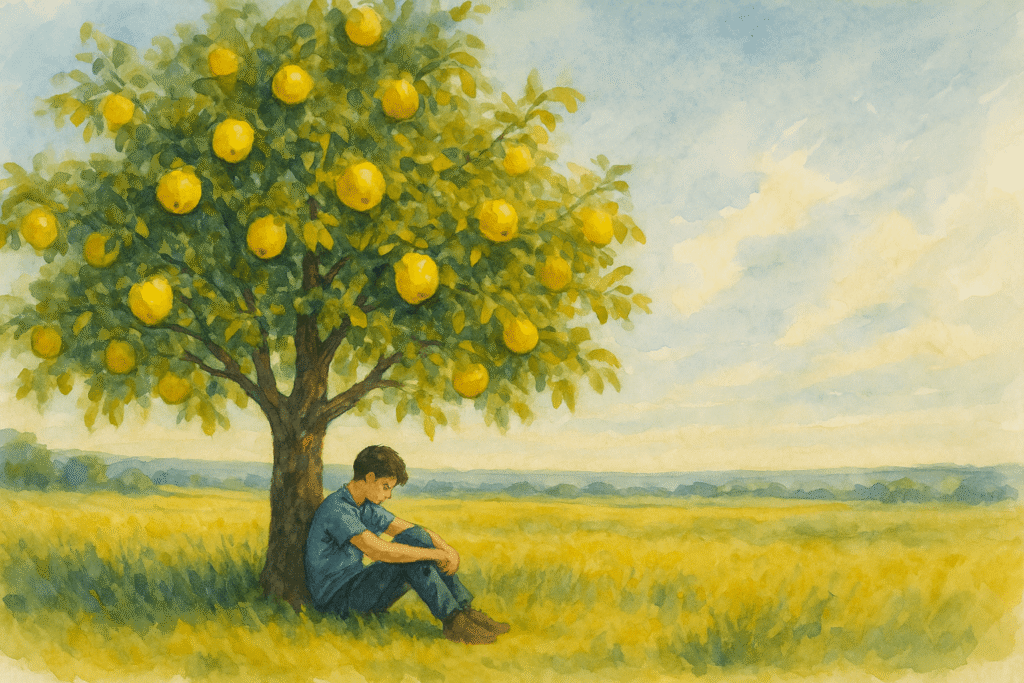
That color… that yellow, immensely beautiful color of the quince — a color that has always caught my attention, a color in which I saw the sparkling sun. In my childhood home, next to the terrace of the house where I lived, we had a small old quince tree — one half of it had dried up, while the other half, like a true miracle of nature, blossomed and bore fruit.
I was amazed at how this half-dead tree continued to live — amazed at its strength and at the beauty it radiated. When spring came, one half of the tree was covered with green, velvety quince leaves and beautiful little pink flowers, delicate as silk and as lovely as tiny pink diamonds. And the other half… the dry, dead half… it was gray, its branches bare, without color or leaves. Only occasionally would a blue tit land on it and sing its poetic bird song. Yet still, if you are a person who seeks beauty in life, you could always see the grandeur of nature even in the withered branches of that tree.
The quince was like Yin and Yang… it was like the universe itself — like life and death in one. It was as if this tree symbolized my soul — half devastated and desolate, and the other half green and blooming — a soul supposedly dead, yet alive; broken, yet still moving forward. The pain, the loneliness, the broken family, and the lack of love — the thousands of wounds that came with all that — had devastated part of me. And yet, somewhere deep in my soul, the quince tree kept blossoming, and I, despite everything, kept moving forward without stopping — perhaps even in defiance of the seasons and of nature itself.
By the way, have you ever wondered what the exact color of the quince is? For some, this simple and seemingly obvious question has a clear answer — yellow! Period. But if you look deeper into this heavenly fruit, you see the different shades of the world, the many shades of yellow — there is bright yellow, golden yellow, greenish yellow, even plain, ordinary yellow… and in some places, it turns even yellow-brown.
And let’s not even speak of its taste — astringent and tart like loneliness and pain, yet its aroma is warm, with notes of honey, vanilla, and baked apple… like the kiss of love you’ve been waiting for your whole life. And if you boil or bake the quince, that’s when the real transformation takes place — the quince, like a phoenix, is reborn in a new form and flavor, becoming a delight for the human senses. It becomes soft and amber-colored. The tartness disappears, giving way to a warm, velvety autumn sweetness that lingers on the palate, while its aroma grows even deeper — almost mystical.
Perhaps the quince truly embodied human life in some way — its colors and taste blended happiness and sadness, pain and beauty. It was like light emerging from darkness, like wisdom born of life, like autumn, ready to offer the fruits of what you have sown and nurtured. It is no coincidence that ancient peoples called the quince the “golden apple” or the fruit of love, dedicated to the goddess Aphrodite. The quince also appears in our folk songs and sayings as a symbol of maturity and blessing; it is placed on the window or on the table in autumn, for its fragrance and for bringing good energy into the home. It is considered a fruit of luck and pure love, especially when it ripens to a golden hue and fills the air with its strong, mesmerizing aroma. The quince was not just a fruit… it was the human soul.
Our life seems like a quince marmalade — a mixture of all kinds of feelings and events. So today, I invite you to make our own quince marmalade together — we’ll add everything that makes us who we are: we’ll add smiles, pain, failures, hopes, worries, loneliness, love, tears, successes, uncertainty, depression, resurrection, change, peace of mind — and, of course, one kilogram of quinces, one liter of water, sugar, lemon juice, and a touch of cardamon seeds or walnuts.
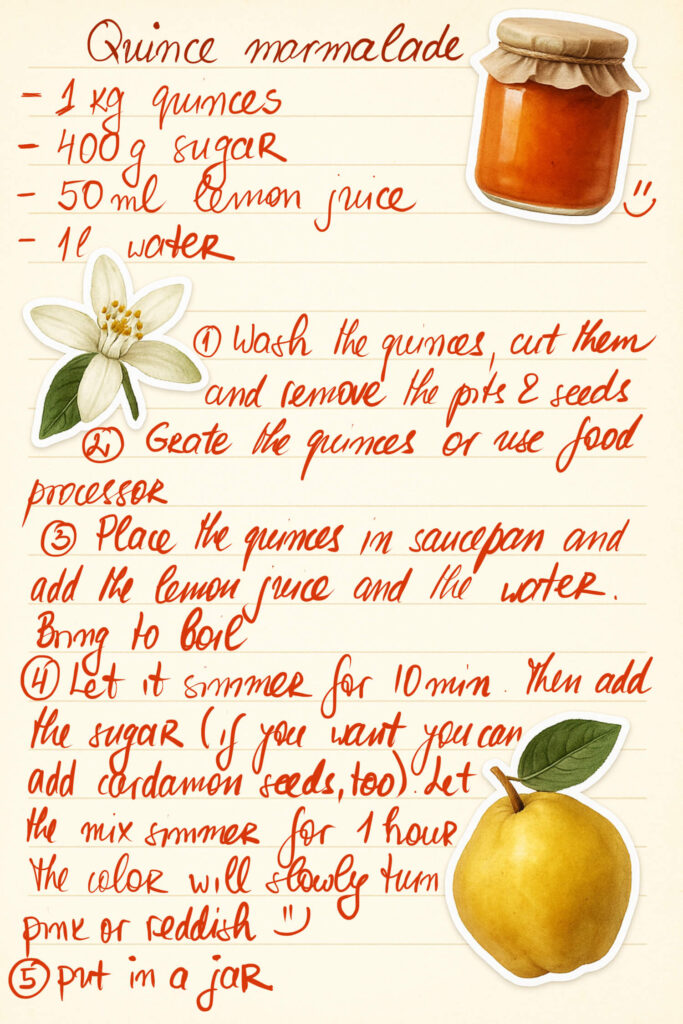
We won’t overdo the sugar — it intoxicates and dulls the senses. Instead of too much unhealthy sweetness, we’ll use less, but in return, we’ll add one secret ingredient to our quince marmalade — the truth, just as it is… raw and healthy! The truth about ourselves, about people, about the world we live in. Because only truth can transform our quince marmalade from tart to amber. Truth heals and transforms our souls and our world — it transforms the quince within our hearts.
The tree in the yard of my childhood home eventually withered — no one took care of it. No one watered it, no one removed the dead branches, and it was left to the mercy of harsh life. Burdened by the pain in our hearts, we simply stopped enjoying the pink blossoms and the bright yellow fruits. One day… it just died, it rotted away. Perhaps the quince tree felt forgotten and stopped fighting, stopped blooming. There was no one left to bloom for.
That’s what happens when we don’t give love and care to our souls, that’s what happens when we do not treasure the quince tree within ourselves. I will not make that mistake again.
And now, let us begin this adventure called “Quince Marmalade”, and may every spoonful of this marmalade bring us peace, warm comfort, happiness, healing for our souls, and the fulfillment of our deepest desires. And as I make this marmalade, I will place one bright yellow quince on the table — to bring me blessings from God and remind me to water that beautiful quince tree with its green, fuzzy leaves and pink blossoms that lives deeply within my soul.
“Oh, you heavenly quince tree, born from the Hell upon this earth—
How do you bloom here, amid such darkness?
How do you outlast this sorrow, and still give your beautiful flowers?”